

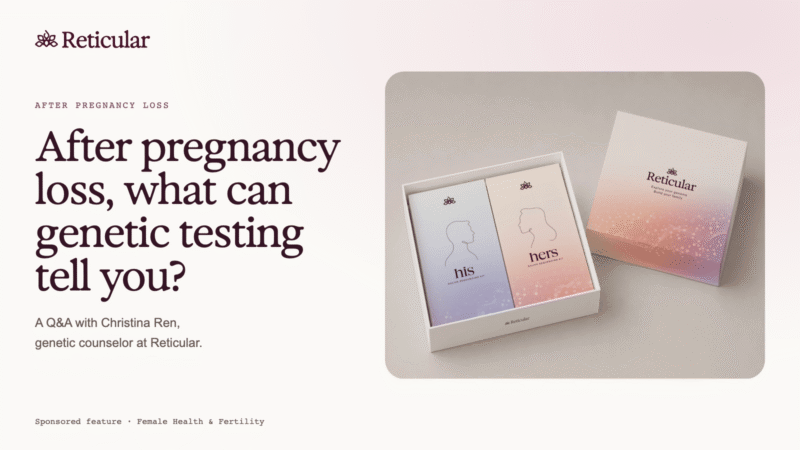
Product Spotlight: After Recurrent Pregnancy Loss, What Can Genetic Testing Tell You?
If you’ve had more than one loss, you may already have had chromosome testing, a karyotype or carrier screening, and still no answer. Here is

At 30 years old, I was fit, healthy and naturally a size 8–10. I knew my body well, which is why, when it started to change, I knew something wasn’t right.
The first thing I noticed was my weight.
I began gaining weight for no obvious reason. At first it was gradual, but it kept coming. I went to my GP because I knew this wasn’t normal for me, but I felt dismissed. I was told it was probably hormonal and sent away.
But the weight gain didn’t stop.
I went from a size 8–10 to a 14, then an 18, and eventually I was buying size 24 clothing. At the same time, so many other things were happening to my body that I felt as though I was falling apart in front of my own eyes.
My personality changed too. I felt permanently on edge, almost as though my body was stuck in fight-or-flight mode. I couldn’t gather my thoughts properly. I became anxious, low and incredibly isolated.
Then came severe, painful acne across my face. My hair started falling out. I developed terrible headaches across the front of my head that sometimes felt as though my brain was burning.
My whole body hurt.
There were days when my back was in so much pain that I genuinely felt as though my bones were going to break. I went to A&E three times because I could barely move.
Then my bones actually did begin to break.
Within the space of around two weeks, I broke a finger and then my hand. Nobody seemed to question why a woman in her early thirties was suddenly suffering fractures alongside all these other symptoms.
My periods had also stopped completely, I felt like my whole body was shutting down.
I even developed severe ear pain and remember being told at one point that perhaps I was spending too much time in the bath.
Meanwhile, I knew something was seriously wrong.
That is one of the hardest parts to explain to somebody who hasn’t experienced it. I wasn’t simply unhappy with gaining weight. I felt ill. I felt as though something inside my body was going terribly wrong and nobody could tell me why.
People saw the weight gain and assumed I must simply be eating too much.
But I knew myself.
I knew the woman looking back at me in the mirror wasn’t the woman I had always known.
Eventually, I became so embarrassed and withdrawn that I left my job. I stopped wanting to see people. I hardly recognised myself.
I would look in the mirror and think, “Who is that girl?”
For almost two years I felt as though I was disappearing.
I became deeply unhappy and, at my lowest points, I genuinely wondered whether I was dying.
What made it worse was feeling that nobody was listening.
Then one day I noticed another change.
At the top of my back, around the base of my neck, I had developed a pronounced fatty pad that hadn’t been there before.
I searched the symptom online.
And suddenly, for the first time in nearly two years, everything began to make sense.
The words Cushing’s disease appeared.
I started reading.
Weight gain. Changes in the face and body. Acne. Hair changes. Weak muscles and bones. Mood changes. Anxiety. Osteoporosis. Headaches.
I was looking at descriptions and images of people with Cushing’s and thinking: This is me.
Strangely, I didn’t feel terrified.
I felt relieved.
Finding information about a disease caused by a pituitary tumour should probably have frightened me, but after living for so long knowing something was wrong without having an explanation, finally seeing something that connected all of my symptoms felt like somebody had switched a light on.
I printed everything I could find and took it to my doctor.
I told him: “I think this is what I have.”
I was told Cushing’s disease was extremely rare and that it was unlikely.
But by then I wasn’t prepared to let it go.
I asked to be referred to endocrinology.
That is one of the biggest things I want other people to take from my story: you know your own body.
Doctors have enormous knowledge and expertise, but they only see us for a snapshot of our lives. We live inside our bodies every single day.
If you know that something isn’t right, keep asking questions.
Ask again. Seek another opinion. Keep a record of your symptoms. Take photographs if your appearance is changing. Write things down.
Advocating for yourself isn’t being difficult.
Sometimes it is necessary.
In October 2020, in the middle of the Covid pandemic, I finally received an appointment with the endocrinology department at my local hospital in Coventry.
I remember being excited to go.
That might sound strange when you’re going to hospital because you think you have a serious disease, but I had spent so long desperately wanting somebody to see what I could see.
When the endocrinologist saw me, she couldn’t diagnose Cushing’s disease just by looking at me — the condition requires specific testing — but she agreed that Cushing’s needed to be investigated.
For the first time, I felt heard.
The following months involved numerous tests. Cushing’s isn’t diagnosed from an MRI scan alone. I underwent hormone testing, blood tests and urine testing before doctors could piece everything together.
Eventually, an MRI showed a tiny tumour, approximately 5mm, on my pituitary gland.
Five millimetres.
Something so small had changed almost every part of my life.
Cushing’s disease occurs when a pituitary tumour causes the body to produce excessive cortisol.
Cortisol is an essential hormone, but prolonged exposure to too much of it can affect virtually every system in the body.
Suddenly the things that had seemed completely unrelated began to fit together.
My weight. My skin. My mood. My hair. My bones. My pain.
I was also found to have osteoporosis, which finally helped explain why my bones had become so fragile.
For so long I had felt as though my body was betraying me.
Now I finally knew why.
In February 2021, I underwent transsphenoidal surgery to remove the tumour.
The surgeons accessed my pituitary gland through my nose and the sphenoid bone at the base of the skull. Because of the position of the tumour, part of my pituitary gland also had to be removed.
The operation lasted around eight hours.
It was also during Covid restrictions, which meant my mum couldn’t come into hospital with me.
She had to leave me at the doors.
Going through major neurosurgery without having your family beside you was frightening, but more than anything I remember feeling grateful.
I finally had a chance to get better.
After the operation, however, recovery wasn’t instant.
My body had spent years producing far too much cortisol. Once the source of that excess cortisol was removed, my body was unable to immediately produce the amount of cortisol I needed.
I developed adrenal insufficiency and needed replacement hydrocortisone.
For around two years I took hydrocortisone several times a day and carried an emergency steroid injection kit.
I had gone from having far too much cortisol circulating through my body to needing medication to provide the cortisol my body required.
Recovery had to be slow.
And I think that is something people don’t always understand about surviving a serious illness.
Having surgery does not mean you wake up the next morning and return to the person you were before you became ill.
Your body has been through something.
Your mind has been through something too.
I decided very early on that I wasn’t going to punish my body for what had happened to it.
I wanted to lose the weight, of course. I wanted to feel like myself again.
But I also knew my body had kept me alive.
So I took my time.
Over the following few years, I gradually lost around ten stone.
There was no overnight transformation.
I focused on eating well, moving my body, doing Pilates and yoga, exercising at home and becoming stronger little by little.
Today I weigh around nine and a half stone and I’m back to approximately a size 8.
But when I look at those numbers, they aren’t actually the part of my story I’m proudest of.
I’m proud that I survived it.
I’m proud that I kept fighting for an answer when I knew something was wrong.
And I’m proud that something which once made me feel completely alone has now given me a reason to make sure other people don’t have to feel that way.
My life today isn’t about pretending Cushing’s never happened.
It’s about what I’ve done with everything it taught me.
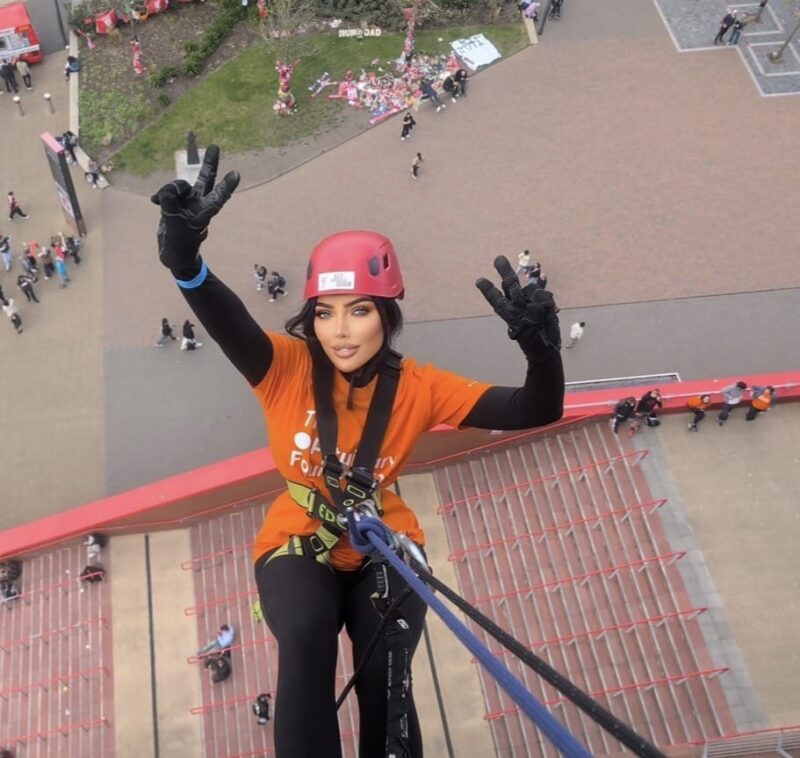
I now help support people affected by pituitary conditions through the Coventry & Warwickshire local support group for The Pituitary Foundation. I started the group two and a half years ago, and it is the best thing I have ever done. Through the group, I have been able to connect with people who understand what it is like to live with a pituitary condition, and to offer the support and reassurance I once needed myself. You can find us on Instagram at @coventrysupportgroup.
When someone walks into one of our meetings frightened, newly diagnosed or simply desperate to meet another person who understands, I know that feeling.
I know what it’s like to Google symptoms in the middle of the night.
I know what it’s like to look in a mirror and no longer recognise yourself.
I know what it’s like to wonder whether anybody is ever going to believe you.
And I know how powerful it is when somebody finally says: “I understand.”
That is why raising awareness of Cushing’s disease matters so much to me.
It is classed as a rare disease, but rare doesn’t mean impossible, and I have met and spoken to so many people all over the world who are going through similar conditions.
If sharing my story means one person recognises symptoms in themselves, asks another question, seeks another opinion or simply feels less alone while going through diagnosis and recovery, then everything I went through can help somebody else.
I sometimes think about the 30-year-old version of me sitting in a doctor’s surgery knowing that something was wrong but struggling to make anybody understand.
I wish I could tell her what I know now.
Trust yourself. Keep asking questions. Keep fighting for answers. And don’t give up on the person you were before you became ill — she is still there.
It took me years to find her again.
But I did.
Although my Cushing’s disease was treated, my health journey did not simply end after surgery.
I now live with hypothyroidism and take daily medication to replace the thyroid hormones my body needs. I still experience periods of significant fatigue and tiredness, and I continue to have regular follow-up and MRI scans to monitor my pituitary gland.
There is always that awareness in the back of my mind that my health needs watching.
Since my pituitary surgery, I have also developed extremely painful periods.
For around seven or eight days every month, the pain can become so severe that leaving the house is difficult. The week before my period can be painful too, with symptoms around ovulation including intense pain through my pelvis and groin, pain beneath my ribs and shooting pain down my legs.
At times it is completely debilitating.
I am currently being investigated for possible endometriosis and, once again, I have found myself having to advocate for my own body.
I have repeatedly explained how severe the pain is and how much of my month it affects, but getting answers has not been straightforward.
I recently had a Mirena coil fitted as an attempt to manage the symptoms, but four weeks later I am still experiencing significant pain and am unsure whether it will be the right treatment for me.
I am also waiting to find out whether I will be offered a laparoscopy, which can be used to investigate and diagnose endometriosis. In the meantime, I have decided to pay privately for an MRI of my abdomen and pelvis because I need to understand what is happening inside my body.
I don’t yet know whether everything I am experiencing now is directly connected to my previous Cushing’s disease, the hormonal changes my body has been through, or whether this is a separate condition altogether.
What I do know is that my experience with Cushing’s taught me never to ignore what my body is telling me.
When you have already spent years knowing something is wrong and struggling to be heard, it changes the way you approach your health forever.
That is also why women’s health and fertility conversations matter so much to me.
Hormones can affect so many parts of our lives — our periods, fertility, mental health, energy, bones, weight and sense of ourselves — and yet women can still spend months or years trying to convince somebody that the pain or changes they are experiencing are real.
I don’t have all of the answers about this part of my health yet.
But this time, I know I will keep asking until I do.
Cushing’s disease is a rare hormonal condition caused by a usually benign tumour of the pituitary gland.
The tumour produces too much ACTH — a hormone that tells the adrenal glands to make cortisol. This leads to persistently high levels of cortisol in the body.
Cortisol is essential for life and helps regulate things such as blood pressure, blood sugar, metabolism, inflammation and the body’s response to stress. However, too much cortisol over a prolonged period can affect almost every system in the body.
Cushing’s disease specifically refers to Cushing’s caused by the pituitary gland. The broader term Cushing’s syndrome includes other causes of excess cortisol, including long-term steroid medication and some adrenal or other tumours.
Symptoms can develop gradually and people may experience them differently. Common signs can include:
Not everybody with Cushing’s will have every symptom, and many of these symptoms can be caused by much more common conditions.
However, when several symptoms appear together or there is a significant unexplained change in your health or appearance, it is important to speak to your GP.
Cushing’s can be difficult to diagnose and usually requires specialist hormone testing rather than an MRI scan alone. If Cushing’s is suspected, patients are normally assessed by an endocrinologist.
For trusted information and support, visit The Pituitary Foundation at pituitary.org.uk or @pituitaryfoundation.
We hope you enjoyed this article. To help us to create more content like this, please consider visiting our Shop.
If you’ve had more than one loss, you may already have had chromosome testing, a karyotype or carrier screening, and still no answer. Here is
I am 36 years old, and I have spent a large part of my life trying to understand my own body and trying to become

In my early 20s, I made a serious commitment to volunteer with the Peace Corps, and my placement was in maternal and child health. From

