I was just 13 years old when my periods hospitalised me. But that hospital visit wasn’t the beginning of my story. It was the point at which I could no longer ignore what my body had been trying to tell me for some time.
I was a normal, happy, healthy 11-year-old when I got my first period.
It wasn’t a shock. I was an early bloomer, so I knew what was happening. What I didn’t know was that it would be my only pain-free period.
Almost immediately, my periods changed. They came twice a month. I was filling night pads that felt like nappies, bleeding through my clothes and experiencing cramps that left me hunched over.
But I didn’t think I was ill.
As girls, we’re taught that periods are supposed to be painful and uncomfortable. So where do you draw the line between a bad period and knowing that something isn’t right?
At 11, I didn’t know.
I thought the pain, bleeding and exhaustion were simply things I had to put up with as a woman. Nobody had taught me what an abnormal period looked like, so for 14 months, I assumed I was just unlucky.
Then, in October 2024, everything changed.
I was at a show I’d been waiting months to see when I was suddenly hit by an agonising pain unlike anything I’d experienced before. I genuinely thought my appendix was rupturing.
I was already due to see my GP the following day because I had been struggling with low iron from my heavy periods. Instead, I asked if the appointment could focus on this new pain.
I was sent home and told it was period pain. If it got worse, I was told to go to A&E.
It did.
That was the beginning of being in and out of hospital. Ultrasound after ultrasound tried to find an explanation.
Maybe it was ovarian cysts, I was told.
So I tried the pill, hoping it would stop the supposed cysts and control the bleeding and pain.
It didn’t feel like an answer. It felt like a guess.
I was referred to gynaecology, hoping someone could finally connect the dots. Instead, the referral was bounced back because I was told I was too young to be seen.
My pain was getting worse, but apparently I was too young for the service that was supposed to investigate it.
So my family and I went privately.
I went into my first private gynaecology appointment convinced that this was finally going to be the appointment where everything made sense.
It wasn’t.
I was told my leg pain was unlikely to be connected to my other symptoms. The pain I experienced when going to the toilet was suggested to be IBS (irritable bowel syndrome). I was told I was too young to have endometriosis, while my back and hip pain was thought to be sciatica.
I was also told I needed to “get back out into the real world” and return to school. My ADHD and anxiety were also brought into the conversation, and I left feeling as though my physical symptoms were being attributed to those diagnoses rather than investigated.
I had gone looking for answers.
I left with more questions.
By this point, I was exhausted. I was still going to hospital, still in pain and still being told I was too young.
Then we got a second opinion.
I didn’t expect much.
But that appointment changed everything.
For the first time, I felt listened to. My doctor validated what I was experiencing and suggested endometriosis before I had even mentioned my family history of it.
Finally, someone was connecting the dots.
An MRI showed thickening around the ligaments supporting my womb and around the back of my womb, which I was told could be a sign of endometriosis.
We decided to try the Mirena coil.
It wasn’t for me.
After having it fitted in September 2025, I spent the next few months struggling with ongoing pain and bleeding and finding the hormonal side effects incredibly difficult. Even before the coil, I was still in and out of hospital needing strong pain relief.
By January 2026, I ended up back in A&E with severe pain. My uterus went into spasm, and the coil was removed.
I went back onto the pill and, after speaking with my gynaecologist, we decided it was time for a laparoscopy.
I was terrified.
But I knew I needed an answer.
In June 2026, I finally got one.
Stage 1 endometriosis
During the laparoscopy, they found endometriosis on my uterosacral ligaments and around the back of my womb. They also found that my bowel was stuck to my pelvis.
The endometriosis was removed, and my histology results later confirmed what we had been looking for all along.
I had stage 1 endometriosis.
After years of appointments, hospital visits and trying to convince people that something wasn’t right, I finally had a name for what I had been experiencing.
And strangely, the biggest thing I felt wasn’t anger.
It was relief.
Looking back, the most exhausting part of living with stage 1 endometriosis wasn’t just the pain. It was having to become my own advocate at an age when I shouldn’t have needed to know how to advocate for myself. I was lucky enough to have my family support me through it but not everyone is as fortunate.
Girls shouldn’t have to fight to be heard.
We shouldn’t have to become experts in our own bodies just to convince someone that we’re in pain.
That’s why I’ve started speaking publicly about my experience and advocating for teenage girls with endometriosis and women’s health. I’ve shared my story on social media and in national media, including the BBC and PEOPLE.
I don’t want another 13-year-old to think she’s simply unlucky because nobody has taught her where the line is.
I want girls to know that they can question their symptoms. They can ask for help. They can say, “This doesn’t feel normal to me.”
And most importantly, they deserve to be heard.
I’m only 14, but I already know one thing for certain:
I won’t stop speaking up until girls are heard.
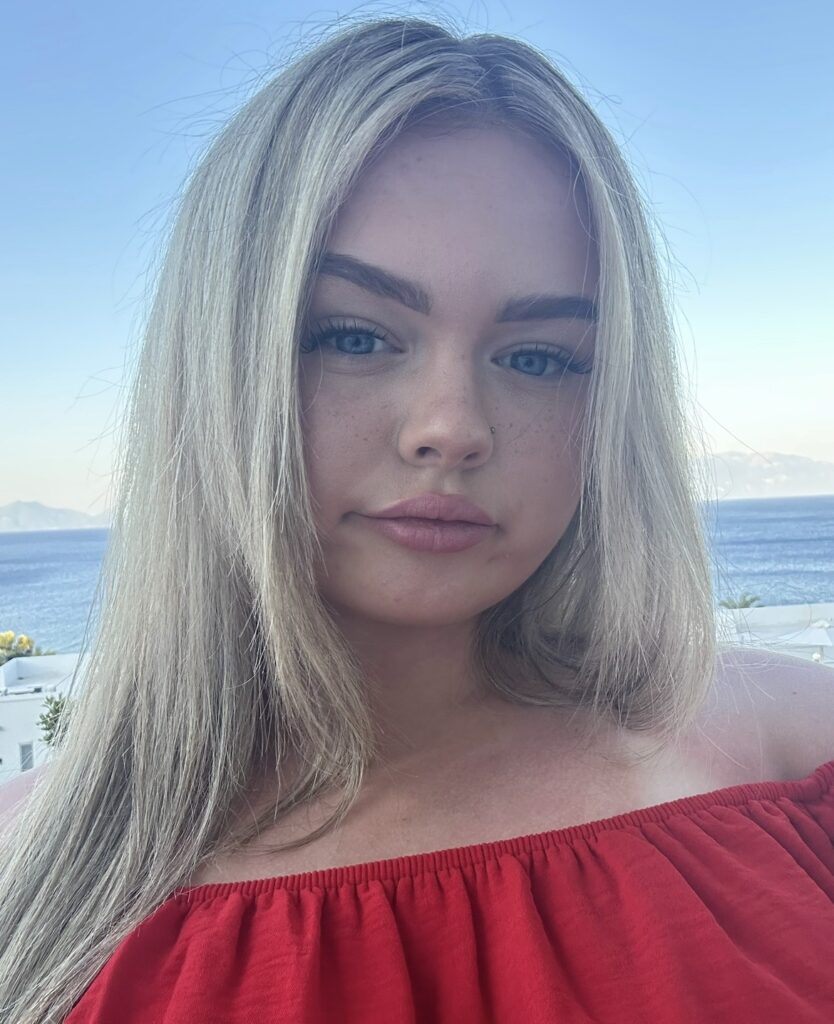
Grace Macfie, 14, is a teenage endometriosis and feminist advocate campaigning for girls to be heard and for severe period pain to be taken seriously. Diagnosed with stage 1 endometriosis, she uses her platform to raise awareness, create a safe community for girls and advocate for earlier diagnosis. Grace has shared her story with BBC News and PEOPLE. Her goal is simple: to make sure the next generation of girls gets the care they deserve.