Before understanding that food could be medicinal, I had horrendous periods. My periods were long, heavy, and painful. When Aunt Flo came to visit, she came with her siblings Nausea, Fatigue, Pain (and sometimes Moody, too).
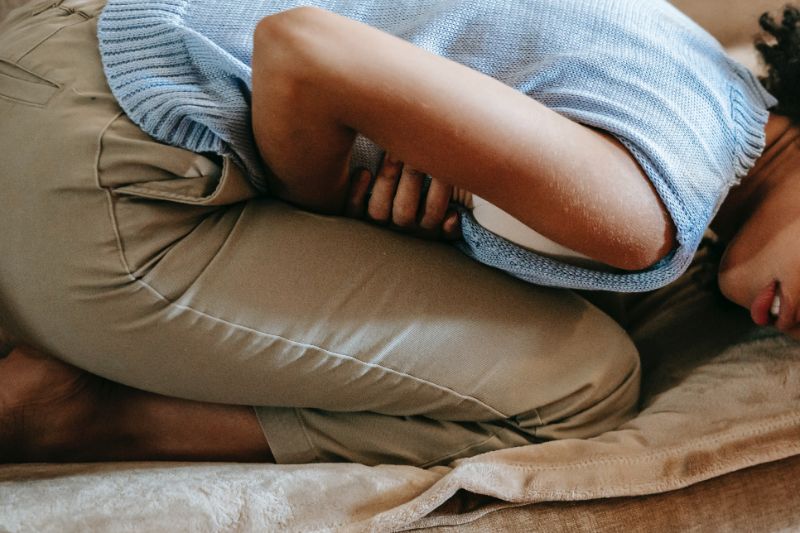
Every period I had, I would have to self-medicate with various pain medications. I have clear, vivid memories of myself curled up in the fetal position on the sofa crying and bartering with God for some sort of pain relief during my period. When no such relief came, I began to wonder if this was my destiny.
A visit to my local general practitioner (GP) proved to be futile when I was told the only option for managing my period pain was the contraceptive pill. When I said I wasn’t interested in this option because of the side effects, my doctor wasn’t very pleased with me. I left disheartened, dismayed, and empty-handed.
A later GP visit would offer me a temporary resolution to my symptoms in the form of mefenamic acid. However, my painless periods came to an unwanted halt when my prescription ended and I wasn’t allowed another due to the side effects.
It would be decades before the solution would unveil itself to me. In 2022, I undertook a menstrual health course where I learnt about the link between hormonal imbalances and periods. Armed with my newfound knowledge and prior knowledge of medicinal foods, I began to explore the impact of lifestyle on hormonal health. This was a huge lightbulb moment and turning point for me.
Nutrition
These days, I try to ensure my meals are nutritionally balanced and hormone-supportive. This means I aim to include a balance of complex carbohydrates, protein, and healthy fats.
I like to add fiber where possible, but that’s a personal preference. I have made healthy swaps e.g. white bread for brown, and I eat way more vegetables. As a fruit lover, I have always found fruits easier to eat, and I previously wouldn’t eat vegetables unless they were sweet, e.g. carrots and sweetcorn, etc.
I have now increased my intake of cruciferous vegetables tremendously. I aim to eat a rainbow of vegetables during dinner; this is to ensure I am giving my body the vitamins and minerals it needs at all times.
If I eat a food that doesn’t fall into these categories (like a pancake), I’ll try to balance it out with berries and a natural sweetener like raw, local honey, date syrup, or cinnamon. I do want to add a disclaimer here and point out that if I eat foods that aren’t necessarily nutritious I no longer beat myself up about it.
If I feel like enjoying a biscuit, chocolate, or dessert, I will indulge. However, I try to do this in moderation as opposed to daily. I believe this allows me to have a healthy relationship with food.
Luckily for me, I’ve always been a huge fan of water so I love drinking it. Something I really struggled with previously was coconut water as I’m not a fan of coconuts. However, I made myself drink it and told myself to focus on the health benefits rather than the taste and, surprisingly enough, now I love it.
Seed cycling has also been a major game-changer for me. It’s a naturopathic remedy based on the idea that taking different seeds at different phases of your cycle supports hormone balance.
When your hormones are balanced, this can lead to a reduction and/or elimination of symptoms linked to PMS, PMDD, PCOS, painful periods, fibroids, and endometriosis. It can take several months to get a good balance in place.
Exercise and movement
My relationship with exercise can only be described as a rollercoaster. I have spent hundreds on gym memberships (for gyms I never once stepped foot in) and on personal trainers. I have since realized that what has best worked for me is long walks, dancing, stretching, and classes. These are all things that I dip in and out of as I feel they help me achieve my goals.
If you are sedentary for most of your working day, I highly recommend finding a movement regime that works for you, and helps you be consistent. It doesn’t have to be intense exercise, as long as you are moving, it is beneficial.
Wellbeing and self-care
Stress exacerbates all hormonal health conditions. It’s really important to me that I am intentional about taking steps to combat daily stressors. I feel this is an important part of wellbeing and self-care.
For me this looks like reading, writing, doodling, journaling, dancing, going for walks, praying, and socializing with friends. This has been integral in my period healing journey.
I am also very intentional with the language I use to describe my period. I used to be very negative (with regards to my thoughts, language, and even how I expected my period to be). Then I would be baffled as to why my periods were so awful.
I practice internal talk and affirmative statements about my period, which honor and celebrate the occasion. Perspective is everything, and I believe this mindset shift has had a major impact on my positive, peaceful periods.
References:
BNF. (n.d.). National Institute for Healthcare and Excellence (NICE) Retrieved from: https://bnf.nice.org.uk/drugs/mefenamic-acid/#side-effects
Encyclopaedia Britannica. (n.d.) Retrieved from: https://www.britannica.com/art/palindrome
British Heart Foundation. (2020, June 4). Paleo diet. Bhf.org.uk; British Heart Foundation. Retrieved from: https://www.bhf.org.uk/informationsupport/heart-matters-magazine/nutrition/ask-the-expert/paleo-diet
Harvard Health Publishing. (2020, August 31). Should You Try the Keto Diet? Harvard Health. Retrieved from: https://www.health.harvard.edu/staying-healthy/should-you-try-the-keto-diet
Delaney, E. (2019). What is a flexitarian diet? BBC Good Food. Retrieved from: https://www.bbcgoodfood.com/howto/guide/what-flexitarian-diet
Flores, A. (2018, March 2). What Does Intuitive Eating Mean? National Eating Disorders Association. Retrieved from: https://www.nationaleatingdisorders.org/blog/what-does-intuitive-eating-mean
Premenstrual Syndrome (PMS). (n.d.). www.nhsinform.scot. Retrieved from: https://www.nhsinform.scot/healthy-living/womens-health/girls-and-young-women-puberty-to-around-25/periods-and-menstrual-health/premenstrual-syndrome-pms
About PMDD. (n.d.). www.mind.org.uk. Retrieved from: https://www.mind.org.uk/information-support/types-of-mental-health-problems/premenstrual-dysphoric-disorder-pmdd/about-pmdd/
NHS. (2019, February 1). Polycystic Ovary Syndrome. NHS. Retrieved from: https://www.nhs.uk/conditions/polycystic-ovary-syndrome-pcos/
Bupa UK. Dysmenorrhoea (painful periods) | Health Information | Bupa UK. (n.d.). Retrieved from: https://www.bupa.co.uk/health-information/womens-health/dysmenorrhoea
British Fibroid Trust. (n.d.). www.britishfibroidtrust.org.uk. http://www.britishfibroidtrust.org.uk/Fib_info/wif.php