



My Journey with Cushing’s disease
At 30 years old, I was fit, healthy and naturally a size 8–10. I knew my body well, which is why, when it started to



Having a family is a massive part of what many women envision for their lives; however, for many, that may not be an easy possibility; from menstrual problems like PCOS and endometriosis to STIs and even problems with the fallopian tubes, many issues can cause infertility. Not to mention, same-sex couples are missing some critical parts in their relationships to make natural conception possible. But that doesn’t have to mean that your dream of being a parent is over; this is where IVF comes in.
IVF treatment has been an option for many who have found that they have fertility problems, allowing people to start the family that they have always wanted. However, If you are thinking of looking into IVF treatment, knowing how to find a fertility clinic near you and start the process from initial consultation to the types of IVF procedures available is vital to understanding if it is a fertility treatment for you.
In this article, we will look at IVF treatment and the process many go through, peeling back the mystery surrounding the topic.
In Vitro Fertilization, otherwise known as IVF treatment, is a fertilization procedure that takes place outside of the body for people who cannot conceive naturally. This could be for several reasons, including fallopian tube issues, menstrual problems, low speem count in a male partner, or being part of a same-sex couple looking to conceive. It is one of the most popular forms of fertility treatment and has been noted to have over a 37% success rate for women under 35.
The process includes the removal of mature eggs from the ovaries at a fertilization clinic and fertilization with sperm. If the fertilization succeeds, the egg (now an embryo) is put back into the woman’s womb. As we will discuss below, it is a long process that can take up to four months or longer to complete per IVF treatment cycle.
Before you decide to go for IVF treatment, it is essential to note that it is one of the most expensive and invasive procedures around, with private prices starting at £5,000 per treatment in the UK. So, it is worth making sure you see your doctor first to see if there are alternative correctional procedures that could be done to help with natural conception before starting the procedure for IVF.
However, if you have decided that IVF is the treatment for you, then you should start with your doctor to talk about your infertility issues, who will advise you on the best practices for chances to get pregnant. If you find that after a year, you are still unable to get pregnant, then you should be recommended to see a fertility specialist at a clinic.
In some cases in the UK, people qualify for free IVF on the NHS, but this is not always an option. If you don’t want to wait and decide to go private, you can look into finding a fertility clinic that doesn’t need a referral from your doctor. There, they will talk about your health issues, discuss your fertility options, and potentially do some tests to check both your egg health and a partner’s sperm health as well. But where can I find a fertility clinic?
When choosing a fertility clinic, it is important to make sure that they don’t just offer a high success rate but that they can also provide compassionate support, transparent pricing, and a great onboarding process. With that said it can take time to decide which to choose. Start with your doctors and see what local fertility clinics they can recommend. But you can always check Google to find the websites of those in the area. However, if that seems too overwhelming, it might be worth checking out your country’s authorities and if they have any tools you can use to narrow your search, such as an online directory.
Depending on your country, you may find that you have online tools like the UK’s Human Fertilization and Embryo Authority (HFEA), which have a page dedicated to the registered clinics in the UK. You can use their pages to check out the latest data on clinic prices and success rates and make the right choice.
Alongside knowing the prices, you should also make sure that when choosing the correct clinic for you, what treatments are offered, their eligibility criteria for new patients, where they are based, waiting times, and if you want extra support, what counseling is offered alongside treatment.
It is important to note, however, that if you choose to go private, it doesn’t necessarily mean that it will up your chances of a successful IVF treatment. Talk to a few and check out their reviews and success stories from others when making a decision.
The IVF treatment is a long process that can take up to 6-8 weeks per cycle, and for some even four months! Before you even start your first cycle you will be asked to attend multiple appointments. This is when the fertility clinic will explain the procedure, you can ask questions and see if IVF is the correct process for you.
Afterward, the process of a single IVF cycle is usually made up of multiple steps. It often goes as follows (although it will differ at each clinic and for each individual):
Overall, the IVF treatment step-by-step process can take anywhere from six weeks to four months including the initial consultation. It is a long process that can take a lot out of you, both physically and emotionally, so make sure you are ready for this.
Knowing what IVF is and how you can boost your chances as you go through the procedure is also key. Some of the things that you can do to help increase your chances of success for your IVF cycles are
Overall, IVF treatment can be a long process that only sometimes yields results the first time around. However, if it is something you want to consider for yourself in the future, then it is always important to talk with your doctor and arrange to visit a fertility clinic. Choosing to have a family is something that everyone should be entitled to the option of, and with science, IVF treatment has made it a possibility for those who didn’t think it was possible for a number of reasons.
References:
Female Infertility. Mayo Clinic Press. Mayo Clinic. mayoclinic.org/diseases-conditions/female-infertility/symptoms-causes/syc-20354308
In Vitro Fertality (IVF). Human Fertilization and Emrbryology Authority, hefa.gove.uk, https://www.hfea.gov.uk/treatments/explore-all-treatments/in-vitro-fertilisation-ivf/
Emily Schiffer. How to Increase the Likelihood of IVF Success the First Time. 2022. Parents. parents.com/getting-pregnant/infertility/treatments/ivf-success-rates-and-how-to-boost-your-chances-of-conceiving/
Eskew, A. M., & Jungheim, E. S. (2017). A History of Developments to Improve in vitro Fertilization. Missouri medicine, 114(3), 156–159.
Kissin, D. M., Boulet, S. L., Jamieson, D. J., & Assisted Reproductive Technology Surveillance and Research Team. (2016). Fertility Treatments in the United States: Improving Access and Outcomes. Obstetrics and gynecology, 128(2), 387–390. doi.org/10.1097/AOG.0000000000001419
van Loendersloot, L., Repping, S., Bossuyt, P. M., van der Veen, F., & van Wely, M. (2014). Prediction models in in vitro fertilization; where are we? A mini review. Journal of advanced research, 5(3), 295–301. doi.org/10.1016/j.jare.2013.05.002
Bahadur, G., Homburg, R., Bosmans, J. E., Huirne, J. A. F., Hinstridge, P., Jayaprakasan, K., Racich, P., Alam, R., Karapanos, I., Illahibuccus, A., Al-Habib, A., & Jauniaux, E. (2020). Observational retrospective study of UK national success, risks and costs for 319,105 IVF/ICSI and 30,669 IUI treatment cycles. BMJ open, 10(3), e034566. doi.org/10.1136/bmjopen-2019-034566
We hope you enjoyed this article. To help us to create more content like this, please consider visiting our Shop.
At 30 years old, I was fit, healthy and naturally a size 8–10. I knew my body well, which is why, when it started to
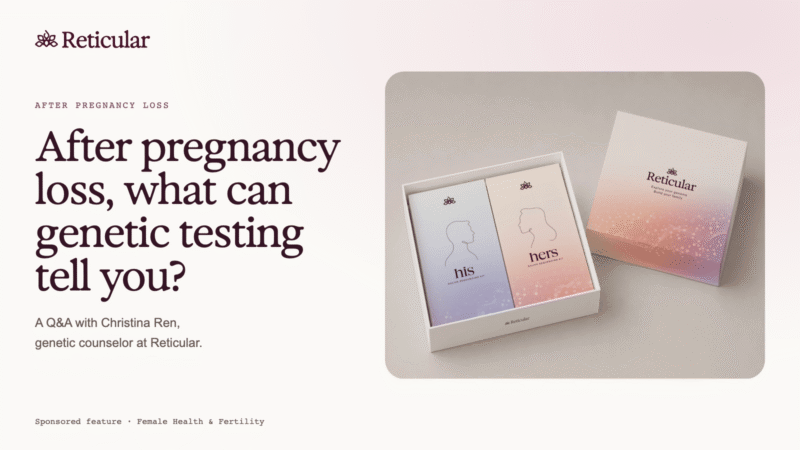
If you’ve had more than one loss, you may already have had chromosome testing, a karyotype or carrier screening, and still no answer. Here is

I am 36 years old, and I have spent a large part of my life trying to understand my own body and trying to become

