

My Journey with Cushing’s disease
At 30 years old, I was fit, healthy and naturally a size 8–10. I knew my body well, which is why, when it started to



Infertility has captured the attention of many researchers and clinicians, with one in six couples now struggling to conceive (WHO, 2021). One area of study that has gained considerable traction is the potential role of probiotics and preconception health in women trying to conceive (Hashem and Gonzalez-Bulnes, 2022).
Probiotics, live bacteria, and yeasts that are beneficial to our health, particularly our digestive and reproductive systems (including the vagina, cervix, and uterus), have been used for centuries (Tomaiuolo et al., 2020; Sirota, Zarek and Segars, 2014). Recently, they’ve attracted renewed interest, and research suggests that they may have specific benefits for women’s fertility (Swanson et al, 2020).
Let’s explore five key benefits of probiotics for women planning to conceive, based on the latest scientific literature.
Probiotics play a crucial role in maintaining a healthy digestive system, which is important for overall health, including reproductive health (Hill et al., 2014). An imbalanced gut microbiome can lead to chronic inflammation and immune dysfunction, potentially hindering fertility (Qi et al., 2021). By promoting a healthy digestive system, probiotics can help create an optimal internal environment for conception, enhancing fertility potential.
Tips: Including probiotic-rich (yogurt, coconut yogurt, kefir, and fermented foods such as sauerkraut, kimchi and pickles) and prebiotic-rich (leeks, garlic, onions, asparagus, Jerusalem artichoke, chicory root, green banana) foods in your daily diet can enhance digestive health and create a favorable internal environment for conception. If possible, try to avoid excessive sugar intake and limit your intake of ultra-processed and processed foods that all negatively influence your gut microbiome.
A woman’s immune system must undergo specific adaptations during pregnancy to allow for the growth of the semi-allogeneic fetus. This process begins even before conception, and research shows that probiotics can influence this adjustment positively (Mor, Aldo and Alvero, 2017). Probiotics can enhance immune function, by increasing the production of IgA-producing cells and natural killer cells, both of which are crucial for a healthy immune system (Yan and Polk, 2011). A strong immune system can lead to a healthier conception and potentially better pregnancy outcomes.
Tips: Daily servings of fermented dairy products, fermented vegetables, and miso soup can strengthen the immune system. Regular physical activity also boosts immunity and gut health, so consider incorporating regular exercise into your routine. Additionally, targeted probiotic supplements could further support your immune system’s health.
The vaginal microbiome is a delicate ecosystem, primarily composed of Lactobacillus species, which help maintain an acidic environment in the vagina. This acidity is essential for creating a hostile environment for pathogenic bacteria and yeasts.
Probiotics can help maintain this balance of bacteria in the vaginal microbiome, which is critical for conception and maintaining a healthy pregnancy (Petrova, 2015). Dysbiosis, or an imbalance in this bacterial ecosystem, has been associated with complications such as preterm birth and miscarriages (Grewal, 2022; Fettweis, 2012). Various studies suggest the use of probiotics, particularly Lactobacillus strains, can help restore and maintain the normal balance of bacteria, providing an optimal environment for conception and subsequent pregnancy (Grewal, 2022; Reid et al., 2003).
Tips: Probiotic supplements specifically designed for vaginal health and eating probiotic-rich foods can help ensure the necessary bacterial balance. Targeted probiotic interventions may be necessary in certain cases that are best to address with a registered nutritional therapist specializing in fertility.
Chronic inflammation can have significant implications for fertility, including diminished ovarian reserve and poor egg quality (Agarwal et al., 2012). Probiotics can help manage inflammation, supporting better fertility outcomes. A 2022 study by Hashem and Gonzalez-Bulnes showed women who regularly took probiotics had lower markers of inflammation compared to those who did not, suggesting a potential positive effect on fertility (Hashem and Gonzalez-Bulnes, 2022).
Tips: Probiotics mentioned above can help manage inflammation and potentially improve fertility outcomes. Additionally, adopting an anti-inflammatory, Mediterranean-type diet rich in fruits, vegetables, lean proteins, healthy fats, and whole grains, along with regular exercise and daily movements/walks can further reduce inflammation.
Probiotics may play a role in maintaining a healthy body weight and metabolic status, which are important factors for fertility. Obesity and metabolic disorders can negatively impact fertility and lead to complications during pregnancy (Sermondade, 2019). Another study suggested that probiotics could assist with weight loss and improve metabolic health, potentially enhancing fertility (Kobyliak et al., 2016).
Tips: Probiotics can aid in maintaining a healthy body weight and metabolic status, both of which significantly influence fertility. Foods rich in probiotics, such as fermented dairy products and fermented vegetables, combined with a balanced diet and regular physical activity, can support weight management and metabolic health.
In summary, the role of probiotics in enhancing female fertility is multifaceted and promising. By carefully selecting probiotic and prebiotic-rich foods and supplements, women can effectively harness these benefits. Coupled with healthy lifestyle choices, these dietary strategies can significantly contribute to improving fertility outcomes.
For women trying to conceive, especially those with gut and/or hormonal issues, previous miscarriages and/or infertility, a nuanced approach is required. Addressing underlying root-causes like gut, hormonal or other health problems, along with the judicious use of probiotic supplements as part of a comprehensive, personalized strategy, appears to be the most promising path.
Collaboration with healthcare professionals that are also able to intervene with targeted probiotic interventions such as registered nutritional therapists specializing in fertility can ensure an individualized, science-based, body-system approach that suits your body’s and your needs.
References:
Agarwal, A., Aponte-Mellado, A., Premkumar, B. J., Shaman, A., & Gupta, S. (2012). The effects of oxidative stress on female reproduction: a review. Reproductive biology and endocrinology : RB&E, 10, 49. doi.org/10.1186/1477-7827-10-49
Fettweis, J. M., Serrano, M. G., Sheth, N. U., Mayer, C. M., Glascock, A. L., Brooks, J. P., Jefferson, K. K., Vaginal Microbiome Consortium (additional members), & Buck, G. A. (2012). Species-level classification of the vaginal microbiome. BMC genomics, 13 Suppl 8(Suppl 8), S17. doi.org/10.1186/1471-2164-13-S8-S17
Grewal, K., Lee, Y. S., Smith, A., Brosens, J. J., Bourne, T., Al-Memar, M., Kundu, S., MacIntyre, D. A., & Bennett, P. R. (2022). Chromosomally normal miscarriage is associated with vaginal dysbiosis and local inflammation. BMC medicine, 20(1), 38. doi.org/10.1186/s12916-021-02227-7
Hashem, N. M., & Gonzalez-Bulnes, A. (2022). The Use of Probiotics for Management and Improvement of Reproductive Eubiosis and Function. Nutrients, 14(4), 902. doi.org/10.3390/nu14040902
Hill, C., Guarner, F., Reid, G., Gibson, G. R., Merenstein, D. J., Pot, B., Morelli, L., Canani, R. B., Flint, H. J., Salminen, S., Calder, P. C., & Sanders, M. E. (2014). Expert consensus document. The International Scientific Association for Probiotics and Prebiotics consensus statement on the scope and appropriate use of the term probiotic. Nature reviews. Gastroenterology & hepatology, 11(8), 506–514. https://doi.org/10.1038/nrgastro.2014.66
Infertility. (2021). World Health Organization. Retrieved from: who.int/health-topics/infertility#tab=tab_1
Kobyliak, N., Conte, C., Cammarota, G., Haley, A. P., Styriak, I., Gaspar, L., Fusek, J., Rodrigo, L., & Kruzliak, P. (2016). Probiotics in prevention and treatment of obesity: a critical view. Nutrition & metabolism, 13, 14. https://doi.org/10.1186/s12986-016-0067-0
Mor, G., Aldo, P., & Alvero, A. B. (2017). The unique immunological and microbial aspects of pregnancy. Nature reviews. Immunology, 17(8), 469–482. doi.org/10.1038/nri.2017.64
Petrova, M. I., Lievens, E., Malik, S., Imholz, N., & Lebeer, S. (2015). Lactobacillus species as biomarkers and agents that can promote various aspects of vaginal health. Frontiers in physiology, 6, 81. doi.org/10.3389/fphys.2015.00081
Qi, X., Yun, C., Pang, Y., & Qiao, J. (2021). The impact of the gut microbiota on the reproductive and metabolic endocrine system. Gut microbes, 13(1), 1–21. doi.org/10.1080/19490976.2021.1894070
Reid, G., Charbonneau, D., Erb, J., Kochanowski, B., Beuerman, D., Poehner, R., & Bruce, A. W. (2003). Oral use of Lactobacillus rhamnosus GR-1 and L. fermentum RC-14 significantly alters vaginal flora: randomized, placebo-controlled trial in 64 healthy women. FEMS immunology and medical microbiology, 35(2), 131–134. doi.org/10.1016/S0928-8244(02)00465-0
Sermondade, N., Huberlant, S., Bourhis-Lefebvre, V., Arbo, E., Gallot, V., Colombani, M., & Fréour, T. (2019). Female obesity is negatively associated with live birth rate following IVF: a systematic review and meta-analysis. Human reproduction update, 25(4), 439–451. doi.org/10.1093/humupd/dmz011
Sirota, I., Zarek, S. M., & Segars, J. H. (2014). Potential influence of the microbiome on infertility and assisted reproductive technology. Seminars in reproductive medicine, 32(1), 35–42. doi.org/10.1055/s-0033-1361821
Swanson, K. S., Gibson, G. R., Hutkins, R., Reimer, R. A., Reid, G., Verbeke, K., Scott, K. P., Holscher, H. D., Azad, M. B., Delzenne, N. M., & Sanders, M. E. (2020). The International Scientific Association for Probiotics and Prebiotics (ISAPP) consensus statement on the definition and scope of synbiotics. Nature reviews. Gastroenterology & hepatology, 17(11), 687–701. doi.org/10.1038/s41575-020-0344-2
Tomaiuolo, R., Veneruso, I., Cariati, F., & D’Argenio, V. (2020). Microbiota and Human Reproduction: The Case of Female Infertility. High-throughput, 9(2), 12. doi.org/10.3390/ht9020012
Yan, F., & Polk, D. B. (2011). Probiotics and immune health. Current opinion in gastroenterology, 27(6), 496–501. doi.org/10.1097/MOG.0b013e32834baa4d
We hope you enjoyed this article. To help us to create more content like this, please consider visiting our Shop.
At 30 years old, I was fit, healthy and naturally a size 8–10. I knew my body well, which is why, when it started to
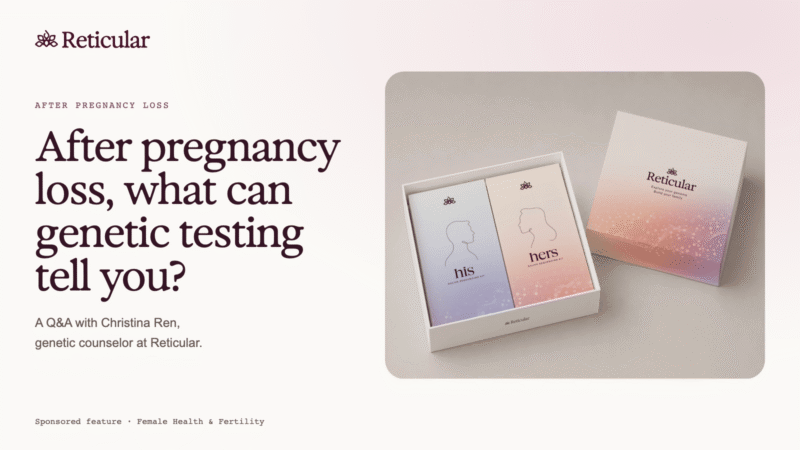
If you’ve had more than one loss, you may already have had chromosome testing, a karyotype or carrier screening, and still no answer. Here is

I am 36 years old, and I have spent a large part of my life trying to understand my own body and trying to become

