


My Journey with Cushing’s disease
At 30 years old, I was fit, healthy and naturally a size 8–10. I knew my body well, which is why, when it started to



At Female Health & Fertility, much of our focus is on reproductive health, looking at how your health can affect your chances of getting pregnant. And for many, these health issues are manageable and don’t stop people from conceiving. But what about those who find they are doing all they can but they are unable to?
In this article, we will delve into the world of infertility, how to get tested for it, and options for starting a family.
There is a misconception that infertility is something that affects very few of the population and it is often seen as a problem primarily affecting female reproductive organs. However, under the current WHO definition, infertility is a “disease of the male or female reproductive system defined by a failure to achieve pregnancy after 12 months”.
The NHS has defined the most common causes of infertility are a lack of menstrual cycle affecting the release of eggs, blockages to the fallopian tubes, and poor semen quality. However, studies have shown there can also be a direct correlation between stress and infertility. What is that old adage; the more you try to get pregnant and stress about it, the less likely it will happen?
WHO states that infertility affects 1 in 6 (about 17.5%) of the global adult population at any time, however, depending on what causes your infertility, this doesn’t have to mean having a child is off the books for you in your future. There are multiple causes of infertility and different types of treatment to help people overcome it and have the family they want.
As stated above, medical experts have found there are multiple causes of infertility in men and women, including a lack of a menstrual cycle, poor semen quality, stress, and blockages in the fallopian tubes. Below we have set out some of the most common causes of infertility that people can face.
For women, some of the main causes of infertility include:
For male infertility, some of the leading causes can be:
In some cases, your doctor may even find that you suffer from none of the above; this is then called unexplained infertility, or you may find it is a mixture of both male and female fertility problems causing you to be infertile. When you go to the doctors, they will test you to see what could be the cause of your infertility and refer you for treatment.
If you and your partner have been trying to conceive for over a year and are finding it hard, you may wish to speak with your GP/doctor about your options, and they may refer you to fertility clinics near you or to speak to a specialist gynecologist or reproductive endocrinologist (sometimes referred to as an RE, this is different to a obstetrician/gynecologist (OB/GYN) physician). At these clinics, you may undergo a series of different tests to understand what may be causing your infertility before you go on to seek treatment options.
The main things your doctor is likely to look at are sperm count, ovulation problems like PCOS or endometriosis, and any fallopian issues that could be causing infertility. However, there are a range of different tests for infertility for men and women that you may be offered, including:
Once it has been determined where the causes lie, your GP doctor or the specialist fertility clinic you have attended will look at the treatments they can offer you. There are three main types of infertility treatments that we will discuss below.
Getting an infertility diagnosis can feel absolute. However, that is not necessarily the case. Currently, there are three main ways that you can be treated for infertility within the medical world. These are medication, surgery, and assisted conception.
There are a few different options available but two main types of medicine offered are clomifene and tamoxifen. These medications are given to help encourage the monthly release of an egg in women who do not ovulate regularly or cannot ovulate at all.
Alternatively, if you have PCOS, then you may be offered metformin to stimulate ovulation. Interestingly, this has been seen to help improve fertility in men as well so it may be offered in cases of male fertility. Finally, for hormone problems, gonadotrophin may be prescribed, which releases hormone and dopamine agonists.
The aim of the medicines is to help the body trigger ovulation and become fertile without the need for more intrusive forms of treatments. However, in other cases, surgery may be prescribed to help.
For women with PCOS, submucosal fibroids or endometriosis, laparoscopic surgery or laparoscopic drilling may be carried out to destroy or remove the fluid-filled sacs in the uterus or even heat-filled lasers to destroy part of the ovary. Other forms of surgery may include fallopian tube surgery to unblock or remove mucus to help the egg and sperm move through them.
For male infertility you may receive a sperm extraction, which is usually to correct things when the epididymis becomes blocked, preventing sperm from being ejaculated normally.
And finally, depending on whether surgery or medication is suitable or works, you may receive the option of assisted conception. Although IVF is the main one that we all know about, there are a few other procedures you can receive, such as:
Studies have found that assisted conception like IVF can be one of the best treatments for infertility, however, health and age can be huge deciding factors on what types of treatment work best.
Before we conclude, as well as looking at the types of treatment you could potentially get for infertility, let’s look at the alternative options available for living with infertility. In the final section, we have put together three ways that you can still plan a future with a family, no matter your fertility diagnosis.
Although getting an infertility diagnosis can be devastating, it is important to understand it doesn’t have to mean the end of your journey if having a child is a part of your and/or your partner’s dreams for the future.
Although treatment is available, it can have side effects or might be too intrusive and painful for you and/or your partner to go through with. So, we have briefly listed some of the alternative options for living with infertility if you are considering an alternative route to having a child.
However, choosing the right option for you can be a tough one, so always speak to your partner and a doctor and gain medical and legal advice to understand your rights as a parent in your country if you choose the surrogacy or donor options.
Science has come a long way and an infertility diagnosis doesn’t have to mean being childless. However, it is important to understand that the alternative options may not result in a child, and they may be intensive, intrusive, and painful procedures for both male and female infertility. If you are in a relationship, it is important to talk with your partner about which one you would be most interested in to ensure you are on the same page.
As well as this, when battling infertility, it is beneficial to have a strong support system around you. From joining groups of people in the same situation as you to looking at therapy, surrounding yourself with people who can empathise with what you are going through is important.
References:
Armstrong, S., & Akande, V. (2013). What is the best treatment option for infertile women aged 40 and over?. Journal of assisted reproduction and genetics, 30(5), 667–671. doi.org/10.1007/s10815-013-9980-6
Dr. Jhutty S. (2024) Adoption vs Egg Donation. Family by CO. cofertility.com/family-learn/adoption-vs-egg-donation
Rooney, K. L., & Domar, A. D. (2018). The relationship between stress and infertility. Dialogues in clinical neuroscience, 20(1), 41–47. doi.org/10.31887/DCNS.2018.20.1/klrooney
WHO. (2023). 1 in 6 people globally is affected by infertility. WHO. .who.int/news/item/04-04-2023-1-in-6-people-globally-affected-by-infertility
Winston, R., & Margara, R. (1987). Effectiveness of treatment for infertility. British medical journal (Clinical research ed.), 295(6598), 608–610. doi.org/10.1136/bmj.295.6598.608-b
We hope you enjoyed this article. To help us to create more content like this, please consider visiting our Shop.
At 30 years old, I was fit, healthy and naturally a size 8–10. I knew my body well, which is why, when it started to
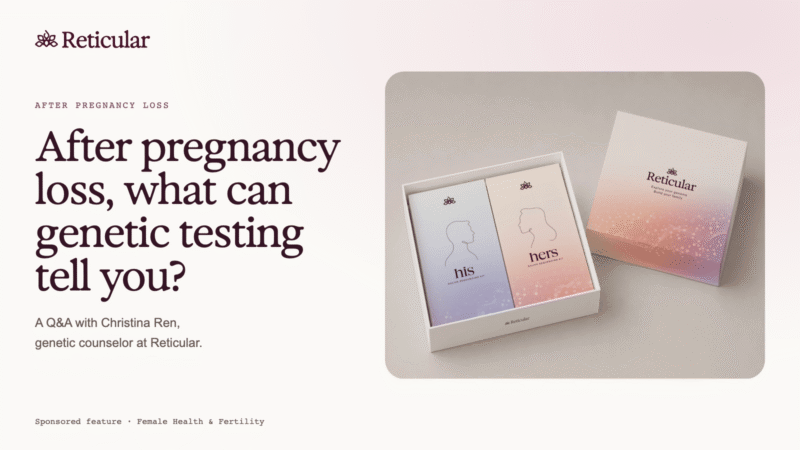
If you’ve had more than one loss, you may already have had chromosome testing, a karyotype or carrier screening, and still no answer. Here is

I am 36 years old, and I have spent a large part of my life trying to understand my own body and trying to become

