I was so excited. My Uncle Sam and his wife were coming to visit us. She was the most beautiful girl I had ever seen, and I wanted to be just like her when I grew up.
I raced out of my room and into the living room. When I got there, I heard my mom say in a hushed, sad voice, “Yes, they are still coming, but they lost the baby. She was showing signs of ectopic pregnancy. This time they had to remove one of her tubes. She might not ever have a baby now.”
At age 12, I didn’t know what they were talking about. All I knew was that the sorrow was palpable before they even arrived. I’ll never forget my Aunt Sandy, sitting on our porch with silent tears streaming down her beautiful cheeks. I wasn’t supposed to know why, but I did.
Ectopic pregnancy can be fatal to the mother and almost always is to the developing fetus. Signs of ectopic pregnancy can be mistaken for other things, knowing them could save a life.
What is ectopic pregnancy?
When a fertilized egg implants outside of the uterus it is referred to as an ectopic pregnancy. Most often found in the fallopian tubes, the embryo could also attach itself to an ovary, the cervix, or even the lower abdomen.
What are ectopic pregnancy symptoms?
The signs and symptoms of ectopic pregnancy can start off relatively mild. As the embryo continues to develop, however, the symptoms can get more severe and painful. The earlier the problem is diagnosed, the better.
What are the early signs of ectopic pregnancy
Ectopic pregnancy symptoms start faintly and may not even be noticed at first. Symptoms and signs of ectopic pregnancy at 4 weeks may include:
- Missed period
- Breast tenderness or sensitivity
- Urinating often
- Nausea and vomiting
- Feeling tired
Because these symptoms occur so early, often before the person knows they are pregnant, and are “normal early pregnancy symptoms”; they may be written off entirely. Sometimes the first signal that something is not right, is when bleeding starts.
What are the signs of ectopic pregnancy at 5 weeks and beyond?
The signs of ectopic pregnancy at 6 weeks often include abdominal pain and irregular bleeding. However, if the embryo has not attached itself in the tubes, the symptoms may not come until later in the pregnancy.
Continued symptoms
Here are more symptoms that may present as the pregnancy progresses:
- Intensifying of ectopic pregnancy early symptoms
- Increased abdominal pain (usually on one side)
- Shoulder pain ectopic pregnancy (this may indicate internal bleeding)
- Ectopic pregnancy bowel symptoms (pain or pressure when urinating or defecating,diarrhea)
- Ectopic pregnancy bleeding
- Ectopic pregnancy discharge (brown or watery)
- Back pain with ectopic pregnancy
If a person has missed a period, had a positive pregnancy test, and/ or experiences these symptoms, they should see their doctor right away.
Ruptured ectopic pregnancy symptoms
If the pregnancy continues too long, it can cause rupture or bursting. Here are the danger signs of ectopic pregnancy miscarriage symptoms:
- Sharp sudden pain in abdomen (especially on one side)
- Dizziness
- Fainting
- Feeling very ill
These symptoms warrant a trip to the nearest emergency room.
How is ectopic pregnancy diagnosed?
There are several ways to diagnose ectopic pregnancies. Let’s look at them now.
Ultrasound
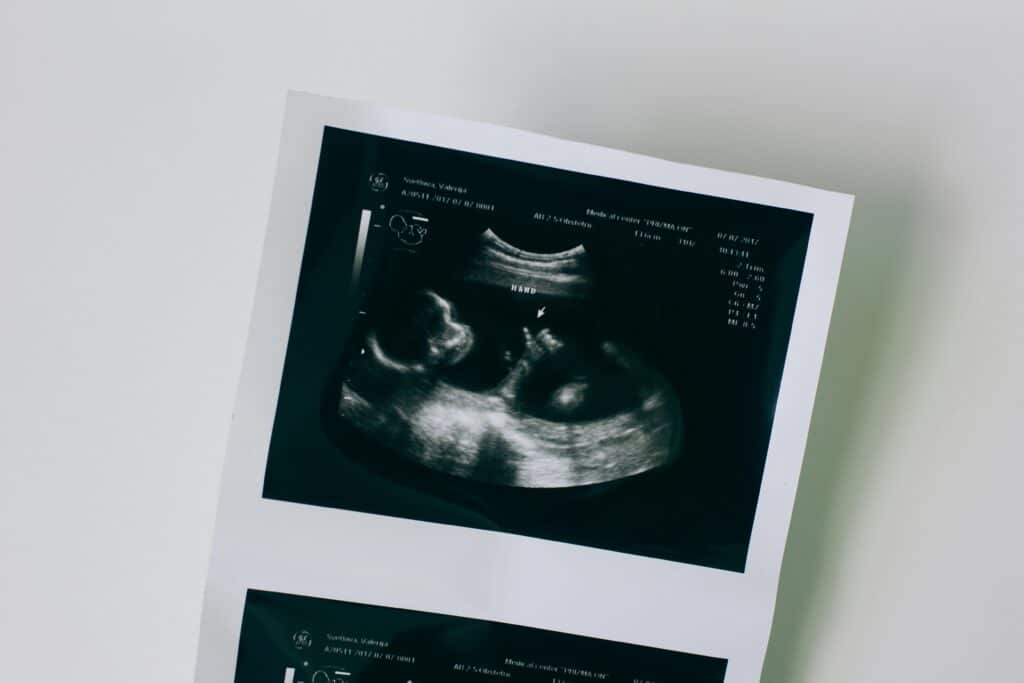
Transvaginal ultrasound can be used to diagnose an ectopic pregnancy. In a study called, Ectopic pregnancy, Ultrasound, we learn: “Ectopic pregnancy is a diagnosis that is quite challenging to make. It has been estimated that 40% of ectopic pregnancies go undiagnosed on initial presentation.
Ectopic pregnancy is also a very difficult condition to identify based on history and physical, with both the history and physical examination features being neither sensitive nor specific for the diagnosis. Data suggests that even experienced gynecologists are unable to detect more than half of the masses created by ectopic pregnancy on a physical exam. Due to the nature of the condition, laboratory data and diagnostic imaging are essential components of diagnosing ectopic pregnancy.
Ultrasonography is the diagnostic imaging study of choice for ectopic pregnancy. Even if an ectopic pregnancy cannot be visualized on ultrasound, diagnosing an intrauterine pregnancy greatly reduces the risk of an ectopic pregnancy being present.”
“There are findings on ultrasound that are indicative of possible ectopic pregnancy. Positive findings include an empty uterine cavity, decidual cast, a thick echogenic endometrium, or a pseudo-gestational sac in the presence of beta hCG levels above the discriminatory zone.”
Blood tests
Blood tests can be performed to test the pregnancy hormone HCG levels.
A study called,Diagnosis and treatment of ectopic pregnancy reveals: “Thus, demonstration of normal doubling of serum levels over 48 hours supports a diagnosis of fetal viability but does not rule out ectopic pregnancy, and a rising β-hCG concentration that fails to reach 50% suggests a failing or ectopic pregnancy, as does a plateau. Falling levels confirm nonviability but do not rule out ectopic pregnancy.”
Laparoscopy
Also known as keyhole surgery, this procedure sends a small tube with a light and camera on it into the abdomen through a small incision. This instrument, called a laparoscopy, can examine the uterus, fallopian tubes, ovaries, and abdominal cavity to find an ectopic pregnancy.
If a pregnancy is found attached where it shouldn’t be, surgical instruments can be sent in to remove it. With this procedure having another surgery later is eliminated.
Who is at risk for tubal pregnancy?
Anyone who can become pregnant can experience an ectopic pregnancy. However, those who have had previous tubal or ectopic pregnancies could be at greater risk. Other things could also affect a higher chance of tubal pregnancy such as:
- Surgery or removal of one tube
- Tubal ligation
- Age
- Previous infections
- Cigarette smoking/second hand smoke exposure
- Some birth control methods such as an IUD (intrauterine device)
- History of infertility
- First pregnancy
A person who is experiencing pregnancy with tube tied symptoms should see their doctor immediately. Fallopian tube pregnancy symptoms are nothing to take lightly.
How is tubal pregnancy treated?
The treatment options depend on the location and development of the pregnancy. The options include medication, laparoscopic procedures (as discussed above), and could even require emergency surgery.
Medication
The medication most commonly used for ectopic pregnancy is methotrexate. This medication, administered via injection, stops the growth of new cells and dissolves the pregnancy.
This method of treatment should only be done after pregnancy outside the uterus is confirmed. Doctors will closely monitor the patient to make sure the medication is working, and that a second dose is not necessary.
What are the signs that methotrexate is working for ectopic pregnancy?
Blood tests will be done to check the pregnancy hormones. If the medication is working the hormone levels will go down.
Is Methotrexate safe?
In a study called, Methotrexate Treatment of Ectopic Pregnancy: Experience at Nizwa Hospital with Literature Review we learn, “Methotrexate treatment of ectopic pregnancies is safe and effective with no major side effects. Intramuscular methotrexate has the advantage of tubal conservation and saves patients from requiring surgery.
“It is easier to administer than the intraoperative route, which is by laparoscopy and needs expertise. Our study showed single dose methotrexate to be an effective treatment option for selected patients with unruptured tubal ectopic pregnancy.”
Surgery
In the case of rupture, heavy bleeding, or advanced development, emergency surgery may be required to save the patient’s life. Most of the time, if there is a rupture, the fallopian tube will need to be removed along with the pregnancy.
In conclusion
My Aunt Sandy was never able to have children, the technology and medical intervention available to her 30 years ago was not as advanced as it is today.
Many people who have experienced the loss of tubal pregnancy do go on to carry children to term. In cases where the fallopian tubes have been removed, other treatments, such as IVF, are available to help someone become pregnant.
Knowing the signs and symptoms, and being treated as early as possible, can go a long way. If you, or someone you know is experiencing symptoms of ectopic pregnancy, help is available.
References
Baker M, dela Cruz J. Ectopic Pregnancy, Ultrasound. [Updated 2023 Jan 16]. In: StatPearls [Internet]. Treasure Island (FL): StatPearls Publishing; 2023 Jan-. Available from: https://www.ncbi.nlm.nih.gov/books/NBK482192/
Murray, H., Baakdah, H., Bardell, T., & Tulandi, T. (2005). Diagnosis and treatment of ectopic pregnancy. CMAJ : Canadian Medical Association journal = journal de l’Association medicale canadienne, 173(8), 905–912. https://doi.org/10.1503/cmaj.050222
Moini, A., Hosseini, R., Jahangiri, N., Shiva, M., & Akhoond, M. R. (2014). Risk factors for ectopic pregnancy: A case-control study. Journal of research in medical sciences : the official journal of Isfahan University of Medical Sciences, 19(9), 844–849.
Dhar, H., Hamdi, I., & Rathi, B. (2011). Methotrexate treatment of ectopic pregnancy: experience at nizwa hospital with literature review. Oman medical journal, 26(2), 94–98. https://doi.org/10.5001/omj.2011.24